“This workshop will be useful to me going forward because I understood what I should ask myself when using AI, and how I can use it effectively as a tool for improvement.”
Anna🇮🇹 Italy
RGAIC
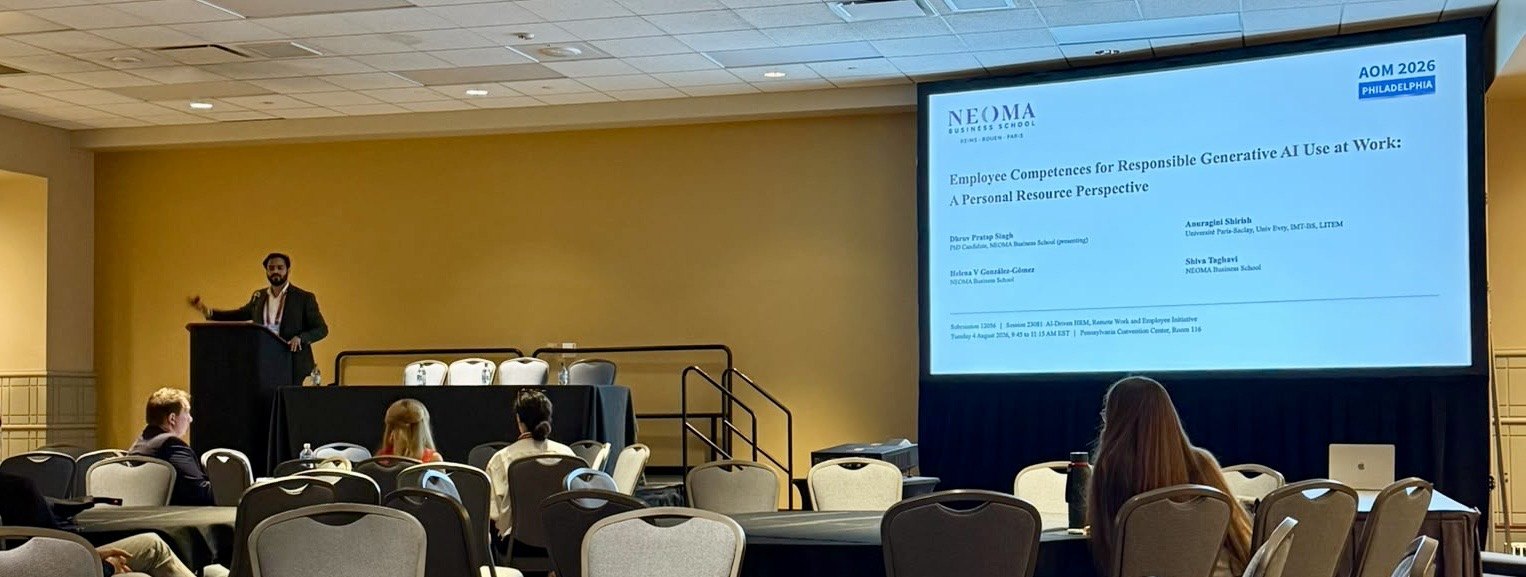
The RGAIC framework captures the competences employees need to use Generative AI knowledgeably, effectively, adaptively, socially appropriately, and ethically at work. It brings five interrelated dimensions together in a higher-order framework.
Ongoing research
Ongoing work is extending RGAIC through field and intervention studies examining how competences for responsible GenAI use develop and operate in practice.
Participant reflections
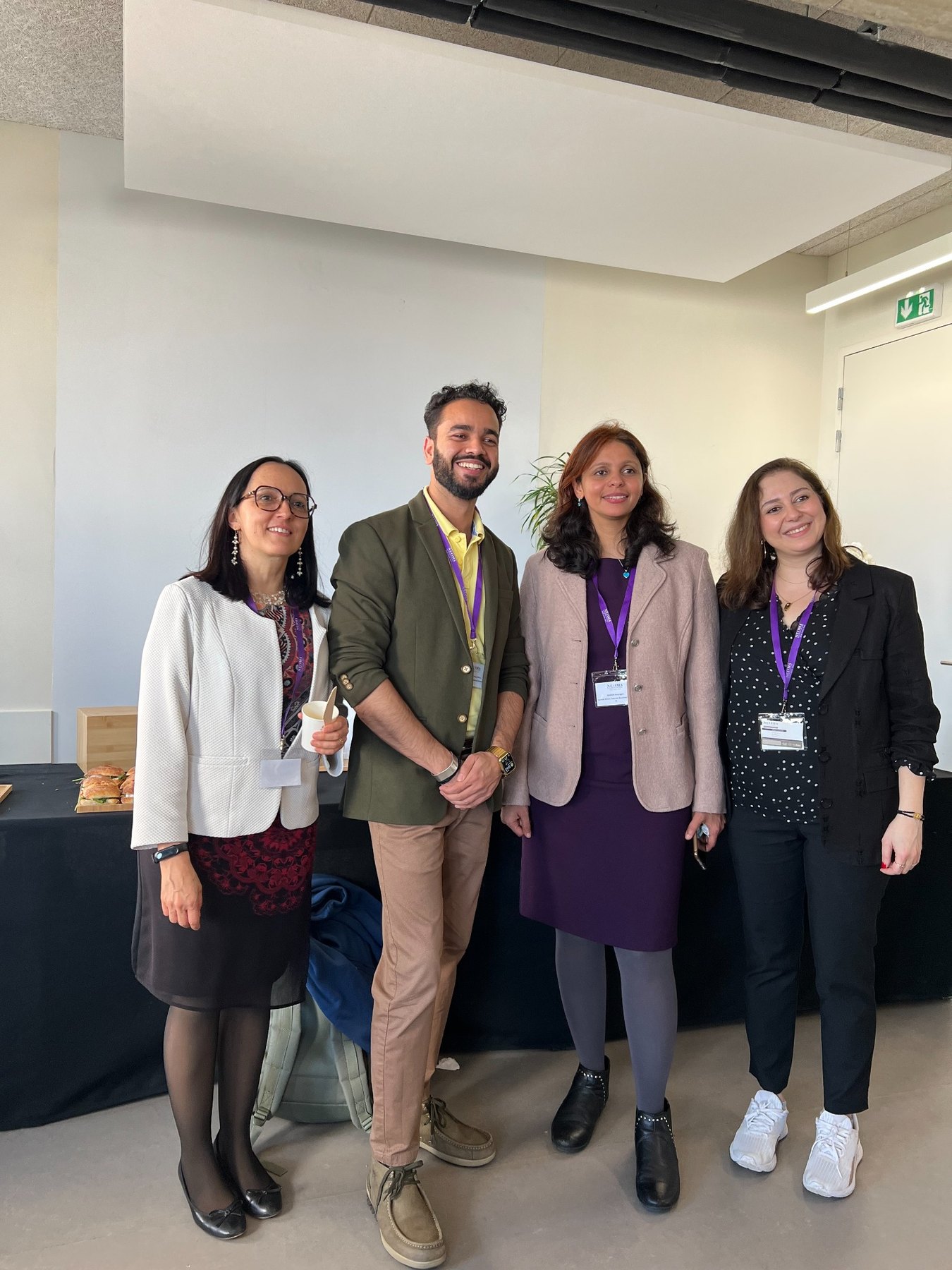
Reflections following the Responsible GenAI Competences mini-workshop in the X-Culture Coaching Program.
“This workshop will be useful to me going forward because I understood what I should ask myself when using AI, and how I can use it effectively as a tool for improvement.”
“Moving forward, I will verify AI outputs, be transparent about its use, and rely on my own judgment rather than depending entirely on AI.”
“I now see AI not as a shortcut, but as a tool that requires responsibility and ethical awareness.”
“Before the mini-workshop, I mostly thought about AI as a productivity tool. Now I see it as a powerful system that requires informed and reflective use.”
“Moving forward, I feel more prepared to guide students responsibly.”
“I will use AI as a support tool for structure and ideas, but always review and validate the output carefully.”
“I want to think about AI, not simply use it.”
“I will use GenAI as a tool for support while ensuring I critically evaluate the output and follow institutional guidelines.”
“I’ll make sure I actually review and take responsibility for anything I use AI for, instead of just trusting it straight away.”
“I will always check the accuracy of what the AI writes and change the tone to make sure it feels personal and helpful for the students.”
“AI will only become more common in our world, and we must learn how to use these tools to our advantage in addition to our own intelligence.”
“This workshop was very informative. It made me think about how I use these tools, where I make mistakes and how I can improve.”
“I found the Friend Method especially valuable, and I will definitely apply it when using GenAI in both professional and personal contexts.”
“I will strive to use AI selectively, carefully verify information, and ensure that what I create maintains its value and integrity.”
“This workshop will be useful to me going forward because I understood what I should ask myself when using AI, and how I can use it effectively as a tool for improvement.”
“Moving forward, I will verify AI outputs, be transparent about its use, and rely on my own judgment rather than depending entirely on AI.”
“I now see AI not as a shortcut, but as a tool that requires responsibility and ethical awareness.”
“Before the mini-workshop, I mostly thought about AI as a productivity tool. Now I see it as a powerful system that requires informed and reflective use.”
“Moving forward, I feel more prepared to guide students responsibly.”
“I will use AI as a support tool for structure and ideas, but always review and validate the output carefully.”
“I want to think about AI, not simply use it.”
“I will use GenAI as a tool for support while ensuring I critically evaluate the output and follow institutional guidelines.”
“I’ll make sure I actually review and take responsibility for anything I use AI for, instead of just trusting it straight away.”
“I will always check the accuracy of what the AI writes and change the tone to make sure it feels personal and helpful for the students.”
“AI will only become more common in our world, and we must learn how to use these tools to our advantage in addition to our own intelligence.”
“This workshop was very informative. It made me think about how I use these tools, where I make mistakes and how I can improve.”
“I found the Friend Method especially valuable, and I will definitely apply it when using GenAI in both professional and personal contexts.”
“I will strive to use AI selectively, carefully verify information, and ensure that what I create maintains its value and integrity.”
Know more
Open the sections below for the conceptual and methodological details behind RGAIC.
Understanding how GenAI works, what shapes output quality, and where its strengths, limitations, and reliability boundaries lie.
Applying GenAI to task goals through effective prompting, iteration, problem solving, ideation, and purposeful use.
Navigating AI-mediated communication with relational awareness, interpersonal appropriateness, and sensitivity to broader consequences.
Learning, reflecting, experimenting, and adapting as tools, practices, and interaction strategies continue to evolve.
Recognizing and responding to ethical, legal, fairness, privacy, misinformation, and policy-related implications of GenAI use.
What the evidence establishes
Across the development programme, RGAIC is empirically distinguishable from AI literacy and general professional competence and explains variance in GenAI-enabled job engagement beyond both. Detailed psychometric evidence is reported in the manuscript.
Singh, D. P., Shirish, A., Gonzalez-Gomez, H., & Taghavi, S. (2026). Employee Competences for Responsible Generative AI Use at Work: A Personal Resource Perspective. Academy of Management Proceedings, 2026(1).
https://doi.org/10.5465/amproc.2026.12056abstract ↗
The full scale-development manuscript is currently being revised for a first-round resubmission to the Human Resource Management Journal as part of its special issue on robust scale development for HRM research.
The RGAIC research programme is developed with Anuragini Shirish, Helena Gonzalez-Gomez, and Shiva Taghavi. Questions about research access: contact@dhruvpratapsingh.org.